Category: Remote Working

  • Unified Communications for Small Business: 6 Features to Seek Out

    Communication and collaboration are critical to any business. Enabling your employees to do both of these effectively requires the right tools. Unified communications provide small businesses with everything they need. If you are considering switching to a new platform, it’s important to define what features matter most to you. Let’s take a look at the top ones you should seek out.

    The Small Business Communication and Collaboration Challenge

    Small businesses typically pursue strategies based on efficiency and productivity. They know they need to operate lean to find success. These businesses often have distributed teams, even more so now with the transition to remote work. Because teams are not in a central space and cannot interact with partners and clients in person, the demand for communication and collaboration tools is skyrocketing.

    The problem that many small businesses face is using multiple platforms for chat, video conferencing, and file sharing. If tools are in silos, teams may be as well. With the rise of cloud-based unified communications, small businesses can now afford integrated solutions that enhance communication and collaboration.

    Choosing Unified Communications for Small Business: Must-Have Features

    Your small business should consider unified communications to resolve the use of disparate systems, save money, and improve workflows. When comparing offerings, there are some must-have features you should include.

    Ability to Scale

    Every business has growth aspirations. As you add team members, you’ll need to consider how your technology can scale. It should be easy and straightforward. Unified communications platforms provide you with this control. Ideally, you want to be able to add users in a few clicks. Be sure to inquire about this when comparing providers.

    Support for Business Continuity

    Business continuity is vital for any organization. Natural disasters or other disruptions can put your company at risk if communication systems aren’t available. Unified communications helps support business continuity. The system can ring all endpoints for every call. If no one answers, you can route calls to a number of your choosing, including mobile or an automated attendant.

    Cloud-Based Phones

    Unified communications frees your staff to answer and receive calls from anywhere via VoIP (voice over IP). Employees can take calls from their desktop computer or mobile phone. You’ll experience the same call quality, no matter where you are. Cloud-based phone systems also streamline management from a single web-based portal. You’ll enjoy all the features of any standard business phone, including voicemail to email, hold and park, transferring calls, and call recording.

    Call Analytics

    Measuring the performance of sales and customer support is possible with call analytics. You can track the usage of your teams through reporting. These reports help you analyze the efficiency of your teams and the quality of the engagement with customers. If phone calls are a medium for your sales and support teams, this is a feature you absolutely need.

    Video Conferencing That’s Secure and Easy to Deploy

    Video conferencing has never been more necessary in the business world. It offers your team the ability to connect when in-person meetings aren’t feasible meaningfully. While many unified communications platforms include video conferencing, they aren’t all the same. It’s especially important to determine the security of the system to ensure privacy and compliance.

    It should also be easy to deploy. It shouldn’t require your team to sit through hours of training or download lots of applications. A browser-based solution means users can start meetings with a click and work from any device.

    File Backup and Collaboration from Anywhere

    Having a secure, accessible repository for documents is paramount to simplifying collaboration. Your team members can work together on a document, even editing at the same time. This functionality eliminates the need to email back and forth with multiple versions of a document. Unified communications allows you to achieve the next level of collaboration, and users can have access from anywhere.

    Security is also a factor with a file repository. Advanced security technology should keep files safe. Backup of those files automatically also means you can recover them quickly in the case of a ransomware attack or other data loss incident.

    Enable Better Communication and Collaboration with Unified Communications

    Unified communications is a smart, reliable toolkit for any small business. Your team will have all the resources it needs to communicate and collaborate, all on one platform. As you search for the right solution, keep in mind these must-have features.

    Elevate by NTELogic offers all of these and so much more. 

  • 6 Realistic Time Management Tips for Remote Workers

    You’re working on your monthly sales target report when your youngest barges into your bedroom, screaming her lungs out because the brother just took her toy. Now you have to pause working and solve the sibling rivalry. Or, you’re busy working on that urgent report, you hear your favorite song playing, so you put your laptop down and run to the living room to listen to it.

    These scenarios describe what working from home is like for most people. If you relate to either, you’re in good company. Managing your time during remote work is hard, so here are some tips.

    1. Create a New Routine

    If you began working remotely in the wake of the Covid-19 pandemic, then your routine before probably involved getting up early, grabbing some coffee, and commuting to work. Now that your life revolves around remote work, the line between work and personal life has become thin or nonexistent.

    When working remotely, you need to find a balance between work and private time to manage your time. The only way to do this is giving yourself a routine again. Routines create order and bring healthy stability to an unstructured day.

     So, wake up at the same time you used to, take a shower, dress up, grab some coffee, and then immerse yourself in your work. If you cannot stick to the same routine every day, try the famed A/B schedule, which involves switching up your schedule either day to day or week to week. It will help break the monotony while keeping you focused.

    2. Track Your Time Spending

    Start tracking your time to determine how long it takes you to complete daily productivity tasks and create the right schedule. For instance, if your work involves calling clients and writing reports, track how long each task takes. This will help you identify the tasks you enjoy doing, those that take longer, and those you find boring. 

    With such info at hand, you can prioritize tasks you find boring when you’re most productive, then complete your day with those you enjoy so you don’t procrastinate. Tracking time also helps you determine how much time to allocate each duty, so you push yourself to complete it before the hour or two you need is over. 

    3. Take Scheduled Breaks 

    Time management during remote work is critical, but remember you’re only human, and you need breaks. You cannot be a productive part of your team if you work yourself to burnout. So, while creating your schedule, make sure you schedule breaks. Have a mini-break every hour, and then create longer one or two hour breaks during the day. 

    You can even use the Promodoro time management technique. It involves working at 25-minute intervals. Simply choose the task, set a 25-minute timer, work on it until the timer goes off, and then take a 15-30 minute break. 

    Use this free time to take a walk, grab a snack, or take your pet around the block. You’ll come back refreshed and ready to bounce back to the next task. 

    4. Stay in Touch with Your Colleagues

    Humans are social beings. Even though you work remotely, you need to have some social interaction to remain productive. Otherwise, you’ll feel socially isolated. To prevent this from happening, stay in touch with your colleagues who’re also working remotely.

    If you’re the team leader, deploy collaboration tools that allow those on your team to connect easily for both formal and informal discussions. Staying in touch with your remote team not only prevents social isolation but also enables you to stay updated on any unexpected events that may affect your remote-working schedule. 

    5. Avoid Multitasking 

    Multitasking might seem like a good thing, but if you want to achieve effective remote work time management, take one step at a time. Why? It takes your brain about 15 minutes to refocus every time you switch to a different task. 15 minutes is a lot of time gone down the drain and time you could have used to complete a single task efficiently.

    As much as you want to get things done, do one thing at a time. You’ll be more productive because all your focus is on it, and you’ll probably finish it more quickly than when you’re trying to get everything done in one go. 

    6. Use Productivity Apps 

    Productivity apps keep you accountable. You can allocate a timeline for each project, so you meet the deadline, and they even alert you when it’s time for a break and when it’s time to get back to work. In other words, they keep on your toes, so you don’t waste time on unnecessary tasks.

    A Remote Work Success Kit Specially Designed for You

    Unable to manage your time while working from home? Consider using a remote work success kit from NTELogic to improve your time management skills while working from home.

  • 10 Video Conferencing Features You’ll Want

    Your video conferencing platform is one of your company’s most important business communications tools. Forty-one percent of users believe that companies who incorporate video conferencing as a communications channel have more engaged employees, and 89 percent say it helps them feel more connected. But, you want to make sure you have the best video conferencing features in order to get the most out of this essential business tool.

    A feature-rich video conferencing solution can empower your teams to be productive no matter where they are located. It can help your company better connect with clients and other stakeholders. It can also make it easier to collaborate, problem-solve, and hold effective meetings in real time.

    Here is a look at the key features that can help your video users have the best experience possible.

    1. Screen Sharing

    For interactive meetings and webinars, screen sharing is vital. You want to be able to share your entire screen as well as individual apps on your desktop during a meeting. This makes it easier for your video conference participants to follow what the presenter is explaining.

    2. Multiple Webcam Capabilities

    During a video conference, it’s more impactful if you can see the face of the individual who’s doing the talking in order to pick up on those all-important visual cues. If your business has a lot of remote workers or if you regularly hold meetings with employees on-the-go, look for dynamic webcam features. Ideally, your video conferencing solution will support multiple webcams so everyone can be seen – and understood – during the meeting. Intermedia’s video conferencing tool can support up to a dozen webcams at once.

    3. VoIP

    For remote teams, communicating with video should be as easy as connecting by phone or chat is. When your video conferencing tool is a part of a Voice over Internet Protocol (VoIP) package, it is. With video conferencing through VoIP, communicating is absolutely seamless. Users can switch from voice calls to video calls or group meetings by pushing a button. There’s no need to establish a new connection or to pause communication just to change channels or add participants.

    4. Chat Features

    Whether you’re broadcasting to a group of leads with a marketing webinar or holding a meeting with employees, your users will get more out of the experience if they can interact. This is why a robust chat feature is so useful. Look for chat capabilities that allow your video conference users to share messages, including text and emojis, during a meeting or online event.

    5. Remote Control

    For collaborative meetings, this video conferencing feature is something you don’t want to miss. It allows participants to have direct control over your computer’s keyboard and mouse, making it possible to edit and make changes to shared documents in real time.

    6. Unlimited Recording

    You’ll want to be able to record your video meetings and presentations. Most video conferencing platforms make recording easy, but you want to look for a feature that will offer unlimited storage in the cloud, as well as easy sharing capabilities. You should be able to record a meeting or webinar and share it with one click with multiple participants.

    7. HD Video

    For an even better meeting experience, HD video can make a huge difference. With high-quality video, everyone can clearly see who’s speaking, making it feel like everyone is right there in the same room.

    8. Branding Features

    This is an important feature if you’re creating video content for customers, such as webinars or educational presentations. You’ll want to be able to include your company logo and any other branding. This will make your webinar content professional-looking.

    9. Dynamic Presentation Features

    For complex presentations, you’ll want to have certain features to rely on. Make sure you can upload a variety of file types, including MP4 videos, PPTs, and PDFs. This gives you the flexibility to add rich media to the presentation to keep your participants’ attention. Another advanced video conferencing feature that can empower better presentations is note sharing. You can capture a series of steps or a specific segment of the presentation and send it to participants as notes during the meeting or webinar.

    10. Performance Reports

    Performance metrics are important for evaluating how well received your presentations are, which parts are the most engaging, and how many people are attending your event. Look for a platform with both attendance and chat reports so you can get adequate feedback from your meetings and webinars.

    It’s worth it to ensure you have all the right video conferencing features for your business. Advanced features make it possible to hold dynamic and effective meetings from anywhere in the world, at any time. Explore how Intermedia’s video conferencing tool can empower your business.

  • Remote Work Is Here to Stay

    What Lies Ahead for Businesses Tomorrow?

    The new normal has settled in on the business world, at least for now. To accommodate for the current environment and public health emergency, many workers have shifted to work from home mode. This significant change will forever impact the way people work as companies realize that remote work is productive, cost-effective, and efficient. Remote work will begin to be part of operational models. So, what does your organization need to be prepared? The right tools and technology will make all the difference.

    Remote Work Was Already Growing in Popularity

    Prior to the COVID-19 outbreak that caused workers to be at home, remote work was already growing in popularity. In Out Of Office: Remote Work In 2023, one study found the number of full-time remote workers doubled between 2018 and 2021. This data provides clear insight into the fact that companies were already changing their mindset on the work environment and understanding the benefits of offering flexible work schedules.

    Why Working from Home Is Here to Stay

    The new normal has settled in on the business world, at least for now. To accommodate for the current environment and public health emergency, many workers have shifted to work from home mode. This significant change will forever impact the way people work as companies realize that remote work is productive, cost-effective, and efficient. Remote work will begin to be part of operational models. So, what does your organization need to be prepared? The right tools and technology will make all the difference.
    These investments and new perspectives won’t disappear after stay at home bans are relaxed. Even industries with regulations around data collection, storage, and sharing, like healthcare and finance, are learning that remote working environments can be just as secure as those in a corporate office.

    Moving Forward: How Remote Work Doesn’t Change Your Operations or Strategy

    Having most or all your employees working from home doesn’t have to impact your operations or strategy. There will be some adjustments that have to be made, but, for the most part, things stay the same. Additionally, there are significant advantages to having a remote team.

    Work Environments Stay Consistent

    For operations to not be affected, ideally, you want employees to have the same work environment at home as they did in the office. The best way to meet this need is with a UCaaS (unified communications as a service) platform. A unified communications platform has everything you need to support remote workers.
    Employees have the same access at home as they would at the office. It combines all communication tools—phone, video conferencing, instant chat, and email—into one hub. UCaaS lives in the cloud, so your team needs only an internet connection to access it. Of note, when using UCaaS, you should also consider any security or privacy requirements and make sure you select a solution that meets these needs.
    The flexibility your team will have with UCaaS could actually make them more productive as communication becomes streamlined and simplified. It even boosts collaboration between employees because they can communicate more easily and share files as needed. While it’s easy to think that collaboration is enhanced by being in the same room, that’s not always true as there could be barriers to this you’re not even aware of, like conflicting schedules, no areas to meet, or other challenges.

    Sizing Up Your Infrastructure

    How you operate doesn’t need to change when going remote, but you’ll want to evaluate your infrastructure. This assessment comes down to three major components for setting up your team for remote work.

    • Reliability: UCaaS is cloud-based, so it’s much more reliable than legacy phone systems. However, not every UCaaS is the same, so look for very high uptime percentages.
    • Security: If you work in a regulated industry or not, you need to protect your data. Pay attention to how a system encrypts data and if it does so only in transit or at rest, as well.
    • Support: When you partner with a UCaaS provider, it’s important to find one that is responsive. Most providers have 24/7 support, but what’s their service level agreement (SLA)? Make sure it fits your needs.

    The Cost of Remote Work

    Does remote work cost your business more? The simple answer is no. In fact, it can decrease costs. The technology and tools you use in the office transfer to working from home. There are no additional costs associated with making your UCaaS mobile—they are designed to offer this flexibility. With UCaaS, you can have unlimited calls and meetings.

    Workers Adapting

    The final element of the future of remote work is how employees will adapt. If they’ve already been working from home occasionally, they have an idea of what to expect. For those new to this, they may need some tips on how to work remotely effectively. The good thing is that their tools are in the same place, so they don’t have to reinvent how they work.
    Remote work is the present and future for many organizations. Are you prepared? See how NTELogic Elevate delivers an exceptional experience for remote workers.

  • Lighting & Camera Angle: Looking Your Best

    We’re spending more time on camera than we could have ever imaged just two months ago. Some of us are accustomed to it. For others, it is new and we still feel awkward seeing ourselves in the almost non-stop video conferences and meetings.
    Here’s a video we came across that is full of great information on how to look good on camera.

  • How to Look Great on a Video Conference Call

    Working remotely doesn’t mean you have to be isolated. That is what’s so great about video conferencing platforms. Face to face communication is now possible without being in the same place. The same connection can be created even if you’re thousands of miles away. While it’s very easy to set up in theory, you always want to look your best and a little prework is needed to do so. Here are 9 tips on how to look great on a video conference call.
    Video conferencing is an essential tool for remote working. Whether you are just transitioning to working from home or have been a long-time remote employee, how you look and sound matters. To ensure that you are optimizing your video calls and creating connections, we’re sharing some quick things you can do to be a master of virtual meetings.

    Follow these tips to ensure your video conference call is a success.

    1. Get the lighting right: Overhead lights are the worst kind of lighting for video calls as they create shadows under your eyes. Bad lighting can put a damper on how you appear. Natural lighting is the best option here. If that’s not possible, use soft light behind your webcam.
    2. Make sure audio quality is crisp: Better audio translates to better image quality. The space you use should have things that can absorb sound like furniture. If you are in an empty room, there could be an echo or reverb.
    3. Show more than just your head: A lot of communication is nonverbal. We often use our hands to make gestures or emphasize things. If possible, move back from your webcam so those on the other end can see you.
    4. Pay attention to angles: In addition to sharing more than just your head on the video call, it’s also a good idea to test your angles. Ideally, your webcam should be at eye level. If you are using the camera on your laptop, then you can use a few books to prop it up so that it’s at eye level.
    5. Test with and without a headset mic: Most video conference call attendees use a headset for audio. Without it, you’ll feel and look more natural. Test both options to see if using your computer’s mic and speakers is sufficient. However, without a headset, you’ll need to have a quiet space with a closed door so other noises aren’t picked up.
    6. Look sharp: Looking presentable on a video call doesn’t mean you need to be ready for Hollywood. It does mean, that when your colleagues see you, you shouldn’t look like you just rolled out of bed. While you may not need a suit and tie, don’t go below business casual. Also, take a peak at yourself in the mirror before that video call, just in case there is a piece of spinach stuck in your teeth from lunch.
    7. Consider your background as well: The webcam’s range will include more than just you, so what’s in the background matters. Junk and clutter in the background will be distracting and could have other attendees thinking you are unprofessional. If possible, ensure the background is tidy and there’s a clean wall behind you with nothing inappropriate.
    8. Be as distraction-free as possible: With so many people juggling family life and work, there are bound to be distractions during meetings. While internal meetings might be more casual, and your co-workers won’t mind if your dog makes a special appearance, video calls with clients and partners should be as distraction-free as possible, which means having a door to close. If that’s not an option, then try to make sure other family members stay in other parts of the house.
    9. Maintain eye contact: Looking someone in the eye while you speak with them shows them you are paying attention. Maintaining eye contact translates to video calls as well. Being able to do this is dependent upon your ability to angle the camera correctly.

    Look Your Best with the Right Technology

    The video conferencing tool you use matters as well. Make sure you have all the functionality you need to look your best. Check out how NTELogic Elevate offers you all the benefits of video conferencing and so much more for remote work.

  • 12 Tips for Managing Remote Teams

    How do you manage remote teams?

    First, take comfort in knowing that managers around the globe, in companies of all sizes, have successfully led entire teams of distributed groups and individuals. If you’ve only led teams who are physically located in the same office, the notion of extending to a distributed team environment can open a lot of new opportunities for you, as the manager. New resources are available if you’re open to a broader geographic area.  Lower cost locations become available, allowing you to allocate resources better. Business continuity is at hand when trusted employees announce a lifestyle change that includes residence in a new location.
    What’s different about remote management is the way you, as a manager, approach team culture, communications, and collaboration. If any of those three elements drop from your management recipe, then team productivity is at risk. When leading a remote team, none of the elements need to be left behind, but in keeping team effectiveness at its pinnacle, the manager must approach some aspects of leadership differently. Below are 12 tips for managing remote workers:

    1. Humanize each team-member – Ensure all team members have their photos entered into your email, chat, and conferencing systems. It may sound trite but in a distributed environment, using every opportunity to humanize each team member is important.
    2. Use video conferencing – Distributed teams tend to require a lot more meetings. That’s because the impromptu water-cooler discussions and white-boarding sessions don’t take place when the team isn’t physically in the office. When you do meet, lead with a culture of video conferencing over voice only. Nothing matches facial expressions and eye contact, even if across a network environment, for understanding and connection. Not everyone is used to video conferencing but by leading by example, video will quickly becomes the norm.
    3. Host team meetings (voice or video) – In addition to individual conversations and group-based discussions, make it a priority to host regular audio and/or video meetings for your team. I host a one-hour meeting with my direct reports weekly and an all-hands every month.
    4. Schedule regular check-ins at all levels – In a distributed environment, you’ll notice that you interact with some employees a lot and a lot of employees a little. When you’re not able to walk by a desk and stop for a quick chat, those who you don’t have a lot of direct contact with may fade into the background for you. For them, it could mean a feeling of disconnectedness with the team.  Make it your responsibility to check in with employees across the team at regular intervals and do so with a phone call. Text via email or chat applications may help to identify an action but voice or video is best for reconnecting. When you do so, be sure to compliment the individual on something accomplished at work and ask for feedback in general or on a specific topic. You may not see it, but doing this simple act is important for remote workers.
    5. Create casual Team building – In several teams that I’ve been a part of, a creative individual has typically come up with a fun virtual team building idea. One employee featured a different team member every two weeks in a humorous write up that she called ‘the blawg’. Another company had a full intranet area for pet owners to share stories and photos. One employee hosted a ‘guess where I am’ photo area that garnered a lot of conversation across the teams. Since you can’t take your distributed team out to lunch or dinner for bonding, these casual team-building exercises, only if they are natural and authentic, tend to bring out personalities and provide more color to the virtual team.
    6. Don’t forget, simple touches matter – Nothing beats receiving a gift or a hand-written note in the mail. For those who worked hard to achieve something great, send them a gift card, and award or something else. Always include a hand-written note along with whatever you send. Over the holidays, get hand-written holiday cards out to everyone. Simple touches are often overlooked in distributed environments but if you want someone to feel appreciated, make the effort to appreciate them.
    7. Don’t multi-task – When you have more meetings with your team-members and colleagues (because you will have more meetings in a distributed environment) it is tempting and easy to multi-task during your calls. Don’t do it. If you’ve made the time to discuss a topic with your team or an individual – be present. When the conversation stops and your name is mentioned, the silence from lack of following the conversation sets a tone of irreverence and discourtesy. Treat virtual conversations the very same way you’d treat an in-person conversation.
    8. Set working hours and expectations – Employees who are physically in the office have much more of a feeling that their presence or absence, is noticeable. Some remote employees, on the other hand, who are more self-managed, may begin exercising flexible or creative working hours. It is up to the manager to set expectations for business hours and availability. In the eventual case where an individual is consistently offline for several business hours, a 1:1 conversation to reinforce expectations may be needed.
    9. Require meeting objectives – As humans naturally gravitate toward social interaction, a remote work environment often blossoms into far more meetings scheduled than a physical office environment. While interactions are good for teambuilding, too many meetings may drain the hours for acting rather than talking. One way to manage the meeting volume is to require meeting objectives. The most productive meetings are those focused on solving problems and making decisions. The meetings types that tend to proliferate coming with no objections, focusing on reporting out, exchanging information or data gathering. Drive to a culture where meetings are welcomed but must come with a clear objective that is action oriented.
    10. Model the right meeting behavior – As the most productive meetings begin with clear objectives and conclude with documented actions (owner, deliverable, and date), many meeting owners may not be aware of effective meeting management practices. As the manager or management team, conduct your meetings in this manner so that others can understand what effective meeting management looks like and then encourage them to do the same.
    11. Track actions – Without the ability to check in on progress with a quick walk-by, tracking actions becomes much more important for the team leader in a distributed team. One way for everyone to stay aligned on actions and priorities is to maintain a shared project plan and action list.  Always make sure the action list includes the action owner, deliverable, and due date. I like to include a simple green, yellow, red next to each action so everyone is clear where actions stand and push to get deliverables in by the due date. Another hint from years of doing this, watch for those who just keep changing the due date when they don’t deliver on their initial date. If task owners agree on their deliverable and date, short of a discussion that changes expectations, individual accountability is important for an action-driven team.
    12. Make sure you have the right tools – If the company is embracing a remote work environment, it is your responsibility to ensure they are set up with the right work environment. Aside from the chair and desk they’ll provide, you need to arm them with a good PC, screen, video conferencing, chat, email, business phone system, file sharing, and collaboration tools. Employees without the right tools will not be able to put their best foot forward and will soon get frustrated with their work environment. They need the basics.

    NTELogic offers the right communications and collaboration tools for effective remote and distributed team management. Learn how our full office in the cloud suite can help.

  • Top 10 Tips for Keeping Virtual Meetings Engaging

    By leveraging video conferencing technology, you can lead meetings where it’s easy to connect and collaborate. The ability to offer remote work opportunities for your team can be one of the most valuable decisions you make. It means that your employees can work together seamlessly without being there.
    If you want those attending to stay focused and foster collaboration, consider these tips.

    1. Use an agenda: Put your agenda up as your first presentation in your video conference. It’s also a good idea to send it before the meeting as part of the invitation. By creating a schedule, you’ve documented what needs to be discussed and who needs to share information, inviting better organization into your meeting.
    2. Start with a welcome: Before you get moving on the agenda items, make any necessary introductions and state what role those on the call play in the project. This is also a time when you can set ground rules like staying mute if not talking and using the chat for questions so you can gather them in one place before going through them.
    3. Make sure there are no technical issues: You’ll want to check all aspects of your video conferencing setup before the meeting so that technical problems don’t bog you down. Your setup run-through should include checking your webcam, removing background distractions, checking your headset, and practicing screen sharing.
    4. Take notes and share them post-call: Appoint someone in the group as a note-taker to quickly summarize the points made and ideas discussed. Post-meeting, you can flesh these out and include the next steps. Then share them with the participants so that everyone has clarity on what was decided during the meeting.
    5. Avoid multitasking: Virtual meetings still require your undivided attention, so don’t try to multitask or eat lunch. You need to be present for the meeting, which means more than just showing up. Concentrate on the topic of the meeting at hand, and you’ll find it takes less time to resolve than if there were interruptions from distractions.
    6. Share what’s relevant: While you want to keep your audience on point, don’t share content that’s not relevant to the discussion. This could cause you to get off topic and waste time. Plan ahead on what you’ll share and how it brings value to the meeting.
    7. Steer clear of small spreadsheets: If you need to share content in a spreadsheet, think about how it will look on screen. You may have a nice size monitor, but others may be viewing from laptops and tablets. They won’t be able to see small spreadsheets. Alternatively, you could break up the spreadsheet into smaller pieces to highlight what’s necessary. Or, you could take those numbers and create a chart to illustrate the data.
    8. Keep meetings small if possible: The more people you add to the meeting, the more likely it is to take longer and go off-topic. It doesn’t mean you should avoid large meetings; just be sure that everyone attending has a role to play. If others can make do with a summary or recap from their managers, then go this route.
    9. Use mute when not talking: This tip is essential to keeping conversations on track because if you aren’t on mute, then everyone else can hear you typing or any background noise. This causes distractions. Mute is your friend when you are in a virtual meeting to ensure that you don’t miss out on what is being presented.
    10. Employ virtual brainstorming tactics: You don’t have to be in the same room to have a group think session. Most brainstorming exercises can transfer to a virtual meeting setting. With the screen share feature, you can begin mapping out ideas on the screen as others chime in with ideas. Seeing things on the screen will help your attendees stay focused and energized.
  • 10 Must Have Tools for Remote Working

    10 Must Have Tools for Remote Working

    With an unprecedented number of businesses encouraging or mandating personnel to work from home, both business leaders and employees are suddenly faced with the challenge of operating effectively as a distributed workforce.  Suddenly there are a lot of questions about what it takes to support remote employees.

    Fortunately, a lot of companies have already blazed the remote workforce trail and we can learn from them.  What’s more, learning how operate as a distributed team may be useful anyway as 65 percent of surveyed workers state they are more productive at home than in a traditional office.  But what does it take to work successfully from home?  To give your remote workers the opportunity to do their best, they’ll need the right set up.

    Empower your employees with the right toolkit to work from home

    Remote workers can benefit from having an ideal setting and robust technology at their disposal to be more efficient and effective. When working with your remote employees, you should empower them with the must-have ingredients to work successfully from home.

    A Distraction Free Space

    Ideally, it’s good to have a separate room that operates as a home office. Many times, spaces have to play double duty, but whenever possible, your remote staff should have a distraction-free space with available desk space and comfortable chair. A distraction-free space usually means the ability to shut the door, so interruptions from other family members don’t constantly bombard them.

    Fast and Reliable Wi-Fi

    Most of us assume that Wi-Fi reliability is a given, no matter if your team is in a metro or rural area. However, that’s not always the case. Talk to your employees about internet service providers in their location and the different speeds. The minimum speed that avoids lag is 20 Mbps. If you are unsure of your internet speed, test it with these instructions.

    Beyond speed, you also need to consider reliability. Research any concerns about the provider’s ability to maintain near-perfect uptime and what challenges may impact reliability, such as frequent storms or areas prone to power outages.

    Computer Hardware and Peripherals

    The type of work your remote employee does will often prescribe the right computer.  An easy way to make a home hardware checklist is simply to replicate what they have on their desk in the office.  For extended remote working environments, a stand-alone laptop is usually not enough.  Rather, a standard desktop set-up, supported by the right peripherals, is important for productivity.

    Beyond the computer, they’ll need screens.  Most employees benefit from operating at least one external monitor, increasing productivity and making it easier to run multiple applications.  For those with computer-intensive roles, a reasonably-sized monitor can also help prevent eye strain.  A high-quality headset is also important for easy interaction with colleagues and customers over the phone or during video conferencing.  Additionally, for video conferencing, a webcam is necessary and should have the ability to stream HD.  Finally, a keyboard and a mouse with ergonomic features completes the hardware requirements.

    Cloud-Based Phone System

    With a cloud-based phone system, your team will have access to telephony features no matter where they are. If you currently have a legacy phone system that sits on-site, it can be difficult to accommodate remote employees. With cloud-based phone systems, your team can have unobstructed mobility for those who work remotely all the time.

    In seeking out a cloud-based phone system, also look for automation features that deliver real-time information, like sending email alerts when the user has a new voicemail.  Remote employees can then respond quickly if necessary or forward to someone who can.

    Video Conferencing

    While your remote employees can handle most activities and tasks via team chat or email, there are times when it’s essential to meet virtually. With video conferencing, they can easily stream HD video with multiple participants. This feature allows them to easily connect and meet with clients or internal team members efficiently. When looking for a video conferencing app, consider these additional features:

    • Browser-based app: Users don’t have to download any software. They can quickly click a link and be part of the meeting. No plugins or installations required.
    • Screen sharing: This feature is essential for optimized collaboration. Your remote workers can screen share in real-time, which can expedite decision making, saving everyone time. Screen sharing is as simple as a click and offers users the option to share specific documents or tabs.
    • Screen annotations: While using the screen share feature, screen annotations are another vital tool. With screen annotations functionality, participants can draw on the document shared, making notes on actions to take post-call.
    • Meeting recording and automated note taking:  Rather than scrambling to take notes during remote meetings, pick a video conferencing tool that allows your team to record their meetings or automatically types up their meeting notes with automated post-meeting distribution.  Both features save time and tired fingers.
    Team Chat

    Instant communication is critical for remote worker productivity. Your employees need to interact every day to share knowledge and make decisions. Email threads can become long and complicated, and most employees don’t have time to be on long phone calls. Thus, using the right team chat application can eliminate these time wasters.
    Here’s what to look for in a team chat platform that drives productivity:

    • Accessible on desktop and via a mobile app with instant synchronization across channels
    • Ability to add attachments
    • Status settings: this lets team members know who is available, busy, or away
    • Usable while employees are interacting with other communications tools (i.e., sending chats while on a call)

    Team chat delivers the right tools for your employees to stay in touch and resolve issues fast, increasing what they can do every day.

    File Collaboration

    Almost every document your company creates needs the eyes of more than one person. Sharing files can become a nightmare if you’re not using a file collaboration tool. You could end up with multiple versions and a lot of confusion.
    Instead, use a platform that makes file collaboration harmonious. The most up-to-date version will be available to those that have permissions, and all members can co-edit without the fear of overwriting. Employees can also access those files from any device so they can review on the go.
    You’ll also want to make sure your platform has file backup in real-time to ensure that nothing is lost. File restoration is another feature to ask about, which can quickly reinstate your documents in the event of data loss.

    Email and Calendaring

    As email remains the most used channel for business communications, a good remote work environment dictates the need for a smoothly operating inbox for employees to tackle all those additional messages sent across the distributed team.  In particular, with remote work environments, advanced security should be top of mind.  Look for solutions that come with advanced security features such as: anti-phishing and anti-malware protection, real-time link scanning, encryption, data loss prevention and comprehensive IT administrator control.  You’ll want to rely on your eMail provider to identify threats and resolve them in real-time so your remote workers can focus on deliverables rather than worrying about malicious intent.

    Mobile Device

    BYOD (Bring Your Own Device) is already a standard policy across most companies.  In a remote work environment, keeping a smart phone or tablet charged during business hours is important because they are the ultimate utility tools.  As the number of virtual meetings inevitably increases, it is not uncommon to be stuck on a less important conference call when another party urgently needs to reach a team member for a quick discussion.  Ideally the conversation can take place concurrently via chat but sometimes that’s not enough.  That’s when remote workers will be thankful that they have their cell phone charged up.  Additionally, In the case where a home Wi-Fi drops service for any amount of time, a mobile device may become the back up for calls, texts, emails or even video conferencing through your cellular network.  It’s an instant-on business world and extended disruptions of any kind are frustrating.  As remote workers set up their home workspace, be sure they install the mobile version of email, calendaring, chat, video conferencing, and file sharing apps on their mobile phone so they’ll be ready to handle any scenario.

    Webinar Platform

    For the company all-hands meetings, customer presentations or any other virtual meeting beyond 10 participants, consider a webinar solution to support your team in delivering their presentations.  Webinar solutions are specifically designed for broad communications across a distributed audience.  Look for offerings that support HD video broadcasting with easy screen sharing, audience Q&A, real-time polling, and custom invitation functionality.  the moment a company employee takes the virtual stage and an audience is paying attention, you won’t regret having selected the right toolset that is easy to use.

    Working Successfully at Home Starts with the Proper Setup

    For remote workers to be successful, they need the support of management to ensure they have the proper setup and environment. Businesses can provide this with the best technology and guidance. With these aspects, you’ll be better able to manage your remote teams as well.

  • Top 10 Tips for Working at Home Effectively

    Top 10 Tips for Working at Home Effectively

    With recent events, a lot of people are working from home for the very first time.  Workers who shift from an office environment to a home set-up quickly realize that the two are not the same and that a few changes are needed to achieve the same level of success had at the office. This post shares our top ten tips for working from home effectively.

    Does working remotely work for everyone?

    There are a couple of things you’ll quickly notice when you work from home. First, if you’re social, which most of us are, then you’ll miss the camaraderie of daily life in the office. You may not notice the impact of in-person interactions when you’re in the office, but a sense of isolation is definitely possible when you’re not in direct contact with your colleagues all the time. The other thing people who work remotely notice is that you get a lot more work done. Maybe some of that socialization isn’t the best for productivity. Who knows? But one thing is certain – as a lot more people are choosing remote work options either a few days per week or full-time, doing it right has a lot of long-term benefits.

    Here are the best tips for working at home.

    1. Be visible: This is my #1 tip because it’s so crucial. If you’re a remote worker, ‘out of sight – out of mind’ is a real concern so it’s your responsibility to stay on the radar of those who are important to you. Make sure your photo appears on your email, chat, or other internal communication vehicles. Don’t rely 100 percent on email for your communication – use the phone or better yet, video conferencing. When stakeholders hear your voice or see your face, you materialize into a real human rather than just an email address. And, if you can, get into the office periodically to re-establish connections with those you work with.
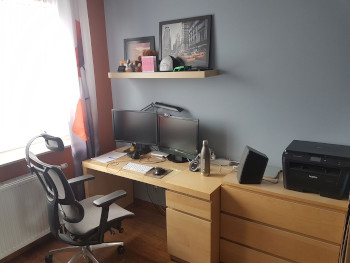
    2. Create a dedicated workspace: Often, when you work from home, you might simply take a seat at the couch or the kitchen table. The problem with these options is there are so many potential distractions! That’s especially true if you don’t live alone. Other family members could be in your space and keep you from being productive. It’s a good idea to have a separate, designated area for work, preferably one where you can close the door.
    3. Make a professional showing: This tip is simple, when working remote, be as professional as you would in an office. Dress professionally (at least no bathrobes), be aware of what’s in the room behind you when your webcam turns on and be proactive in minimizing any surprise appearances by family members or pets.
    4. Manage time effectively: Time management is essential no matter where you work. However, if you’re transitioning to working from home, your routine will definitely change. Create structure by setting up blocks of time for meetings, so you’re in that mindset. Also set aside time for creative thinking and completing projects. It’s tempting to spend the day immediately responding to every email and text that comes in. Don’t do it. Structure your day wisely and inform your colleagues of your availability through your calendar and by using your presence indicator on chat tools.
    5. Pick comfortable furniture: If you’re working from a folding chair and a card table, your back will soon tell you to step it up on the home office equipment. Make sure you have a desk with enough space to work from and an ergonomic chair for comfort. Unlike an office setting, you spend a lot more time in your seat while working from home so it needs to be comfortable.
    6. Get your tech right: In the office you just talk to people. At home, if your webcam freezes or your cell connection is bad, you quickly realize that some basic tech fundamentals are needed to minimize frustration and make technical glitches something you don’t have to worry about. Test your wifi – you need a signal strong enough to stream video. Also test your phone headset, microphone, and web cam before the big conference call. You’ll thank yourself later for making sure your tech works well before you are immersed in your work environment.
    7. Make work and home two separate spaces: It’s not a great idea to blend work and home life seamlessly where your mind is either always on work, even when you should be resting, or your work day is occupied with chores around the home instead of being focused and available to your colleagues. Neither are good to mix. When you’re in your home office, get centered on work and dedicate your time to it. At the end of the day, step out of your home office and recharge your batteries. It’s a good practice to get into.
    8. Watch out for the hot mic: Have you ever read those news stories where a politician says something embarrassing or destructive without realizing their mic is still on? Don’t be the person who flushes the toilet during a conference call (yes, that actually happens). Also, keep track of your web cam – don’t leave it on once the meeting has ended.
    9. Get up and move around: This is a health tip. When you’re working from home, you may find that you aren’t up and moving as much as you do in an office environment. There’s no commuting, there’s no walking to the conference room or stepping over to a colleague’s desk. Take the time during the day to walk around, go outside, eat a healthy lunch, and get the blood flowing.
    10. Stay connected with your colleagues: Relationships are key to getting work done in most business environments. When you’re working from home, it’s harder to establish relationships than working together in an office environment. Take the time to chat with colleagues when you get them on the phone, find common interests, or share a personal story now and again. It doesn’t use up too much time to show some interest in your colleagues and you’ll find that it’ll make your day just a little more enjoyable.

    We stand ready to assist you with your technology needs through this dynamically changing time. Should you have any questions around remote worker options or continuity plans, please let us know. We are ready to assist you in identifying options and supporting implementation.